
Anúncios
Climate-smart architecture represents a revolutionary approach to building design that works harmoniously with nature’s rhythms, leveraging seasonal variations and micro-climates to create sustainable, energy-efficient structures.
🌍 Understanding the Foundation of Climate-Smart Design
Anúncios
The built environment accounts for nearly 40% of global energy consumption and a significant portion of carbon emissions worldwide. As climate change accelerates and resources become scarcer, architects and designers are increasingly turning to nature itself for solutions. Climate-smart architecture isn’t merely about adding solar panels or green roofs—it’s about fundamentally reimagining how buildings interact with their surrounding environment throughout the changing seasons.
Traditional architecture in various cultures has always incorporated climate-responsive elements. From the thick adobe walls of Southwestern American pueblos to the elevated stilt houses of Southeast Asia, indigenous builders intuitively understood their local micro-climates. Modern climate-smart architecture builds upon this ancestral wisdom while integrating contemporary materials, technologies, and scientific understanding of environmental systems.
Decoding Micro-Climates: The Hidden Weather Patterns Around Your Building
Anúncios
A micro-climate refers to the specific atmospheric conditions in a small, localized area that may differ significantly from the surrounding region. These variations can occur within spaces as small as a single property or even different sides of the same building. Understanding these nuanced environmental patterns is essential for climate-smart architectural design.
Several factors create micro-climatic conditions that architects can harness:
- Topography: Hills, valleys, and slopes create distinct temperature zones and wind patterns
- Vegetation: Trees and plants moderate temperature, provide shade, and influence humidity levels
- Water bodies: Proximity to lakes, rivers, or oceans affects temperature regulation and moisture
- Urban heat islands: Built structures and pavement create warmer zones in developed areas
- Building orientation: The relationship between structures and sun paths creates varying light and thermal conditions
☀️ Seasonal Design Strategies: Working with Nature’s Calendar
Climate-smart architecture recognizes that buildings must respond differently to environmental conditions throughout the year. A structure optimized only for summer cooling or winter heating misses tremendous opportunities for energy efficiency and occupant comfort.
Winter Optimization Techniques
During colder months, climate-smart buildings focus on maximizing solar gain while minimizing heat loss. Strategic placement of windows on south-facing walls (in the Northern Hemisphere) captures low-angle winter sunlight, providing natural warmth. Thermal mass materials like concrete, brick, or stone absorb this solar energy during the day and release it gradually at night, reducing heating demands.
Windbreaks positioned on the northern and western sides of buildings deflect cold winter winds, while earth berming—partially embedding structures into the ground—takes advantage of stable underground temperatures that remain warmer than winter air. Vestibules and airlocks at entrances prevent cold air infiltration, and proper insulation with attention to thermal bridging ensures captured warmth stays inside.
Summer Cooling Approaches
As temperatures rise, climate-smart architecture employs passive cooling strategies that minimize mechanical air conditioning reliance. Overhangs, pergolas, and deciduous trees on southern exposures block high summer sun while allowing winter sunlight penetration. Cross-ventilation designs create natural airflow paths, utilizing the stack effect where warm air rises and exits through high openings while drawing cooler air through lower inlets.
Light-colored or reflective roofing materials reduce heat absorption, while green roofs provide insulation and cooling through evapotranspiration. Night flush cooling opens buildings to cooler evening air, purging accumulated daytime heat. Some designs incorporate courtyards or atriums that create cooling microclimates through shade and strategic plantings.
🏗️ Architectural Elements That Harness Micro-Climatic Conditions
Specific design features enable buildings to respond dynamically to their immediate environmental context, functioning almost as living organisms that breathe and adapt with changing conditions.
Responsive Building Envelopes
The building envelope—the physical separator between interior and exterior environments—is critical in climate-smart design. Double-skin facades create a buffer zone that can be ventilated or sealed depending on seasonal needs. Operable elements allow occupants to adjust openings based on immediate weather conditions, providing natural ventilation when beneficial and sealed protection when necessary.
Phase-change materials integrated into walls absorb excess heat when temperatures rise and release it when conditions cool, automatically regulating interior temperatures. Electrochromic glass can darken or lighten in response to sunlight intensity, controlling solar heat gain without blocking views or requiring mechanical shades.
Strategic Landscaping and Site Design
The area surrounding a building creates crucial micro-climatic conditions that impact energy performance and comfort. Deciduous trees positioned strategically provide summer shade while allowing winter sun after leaves fall. Evergreen windbreaks on exposed sides deflect harsh winds year-round without blocking desired sunlight.
Water features positioned in courtyards or near air intake points cool breezes through evaporative effects during hot months. Permeable paving and rain gardens manage stormwater while reducing heat island effects compared to conventional asphalt. Vegetated walls and trellises create vertical gardens that insulate, cool, and filter air while occupying minimal ground space.
Regional Adaptations: Climate-Smart Solutions Across Different Zones
Effective climate-smart architecture must respond to specific regional conditions rather than applying universal solutions. A design optimized for a desert climate would be inappropriate in a humid tropical zone or cold temperate region.
Hot-Arid Climates
In desert regions with extreme temperature swings between day and night, thick walls with high thermal mass moderate interior temperatures. Courtyards create shaded microclimates while allowing controlled natural ventilation. Light-colored surfaces reflect intense solar radiation, and minimal window openings on east and west walls reduce heat gain during low-angle sun periods. Wind towers or malqafs capture breezes and direct them into living spaces, sometimes passing air over water features for evaporative cooling.
Hot-Humid Tropical Zones
Tropical architecture prioritizes ventilation and shade over thermal mass. Elevated structures on stilts capture cooling breezes while avoiding ground-level humidity and flooding risks. Large overhanging roofs protect walls and openings from intense sun and rain. Minimal interior partitions allow continuous airflow, while louvered windows and screens provide security and privacy without blocking ventilation. Materials that resist moisture and biological growth are essential in these climates.
Cold-Temperate Regions
Buildings in cold climates emphasize heat retention and solar gain maximization. Compact forms with minimal surface area reduce heat loss, while south-facing glazing (in Northern Hemisphere) captures winter sunlight. Superinsulated envelopes with triple-glazed windows and attention to airtightness prevent thermal losses. Earth-sheltered designs or buildings partially embedded into slopes benefit from stable ground temperatures. Vestibules and mudrooms create airlock entries that prevent cold air infiltration.
📊 Measuring Success: Performance Metrics for Climate-Smart Buildings
Quantifying the effectiveness of climate-smart design requires comprehensive assessment beyond simple energy bills. Multiple metrics provide a complete picture of building performance and sustainability.
| Performance Metric | What It Measures | Target Goals |
|---|---|---|
| Energy Use Intensity (EUI) | Annual energy consumption per square foot | Below 25 kBtu/ft²/year |
| Peak Demand Reduction | Decrease in maximum electricity draw | 30-50% reduction vs. baseline |
| Thermal Comfort Hours | Percentage of occupied time within comfort range | Above 90% without mechanical systems |
| Daylight Autonomy | Hours with sufficient natural lighting | Above 75% during occupied hours |
| Carbon Intensity | Operational carbon emissions per area | Net-zero or carbon-negative |
Advanced building monitoring systems track these metrics in real-time, providing data that informs operational adjustments and validates design assumptions. Post-occupancy evaluations compare predicted performance with actual results, creating feedback loops that improve future projects.
🌱 Integrating Technology with Passive Strategies
While climate-smart architecture emphasizes passive design principles, strategic technology integration enhances performance without contradicting sustainability goals. The key is using technology to optimize rather than replace natural environmental responses.
Smart building management systems learn occupancy patterns and weather forecasts, automatically adjusting operable windows, shades, and ventilation to maximize passive conditioning while minimizing mechanical system use. Sensors monitoring temperature, humidity, CO2 levels, and light intensity provide data that triggers appropriate responses—opening high windows for stack ventilation when conditions allow, or pre-cooling thermal mass during off-peak hours using renewable energy.
Building information modeling (BIM) combined with environmental simulation software allows designers to test countless variations before construction begins. These tools model sun angles throughout the year, prevailing wind patterns, thermal performance, and daylighting distribution, enabling optimization of building orientation, window placement, shading devices, and material selection for specific site conditions.
Overcoming Implementation Challenges and Misconceptions
Despite clear benefits, climate-smart architecture faces several barriers to widespread adoption. Addressing these challenges requires education, policy changes, and shifts in industry practices.
Initial cost concerns often deter clients, though life-cycle analysis typically reveals significant long-term savings through reduced energy consumption and maintenance needs. Many passive design strategies add minimal cost when incorporated during initial planning rather than retrofitted later. Financing mechanisms that account for operational savings can make upfront investments more accessible.
Building codes and regulations sometimes inadvertently discourage climate-smart approaches by mandating conventional systems or restricting innovative designs. Advocacy for performance-based codes that measure outcomes rather than prescribing specific methods enables greater design flexibility. Demonstrating successful precedents helps regulators gain confidence in alternative approaches.
Knowledge gaps among designers, builders, and trades present another challenge. Climate-smart architecture requires integrated design processes where architects, engineers, and contractors collaborate from project inception. Professional development programs and successful case studies help disseminate expertise throughout the industry.
🔮 Future Directions: Adaptive Buildings and Climate Resilience
As climate patterns become increasingly unpredictable, future architecture must go beyond current conditions to anticipate changing environmental scenarios. Climate-smart design is evolving toward truly adaptive buildings that respond dynamically to both regular seasonal cycles and extreme weather events.
Kinetic architecture with movable components adjusts building configuration throughout the day and year. Facades that change shape or orientation, adjustable shading systems that track the sun, and reconfigurable floor plans that accommodate different seasonal uses represent emerging possibilities. Biomimetic designs draw inspiration from natural organisms that adapt to environmental changes, incorporating materials and systems that respond autonomously to stimuli.
Climate resilience features prepare buildings for extreme events while maintaining everyday efficiency. Flood-resistant designs in vulnerable areas, passive survivability ensuring habitability during power outages, and structures that withstand intensifying storms protect occupants while reducing disaster recovery costs. Distributed energy systems with battery storage and water harvesting infrastructure create self-sufficient buildings less dependent on vulnerable infrastructure networks.
Practical Steps Toward Climate-Smart Residential Design
Homeowners and small-scale builders can implement climate-smart principles even without architectural expertise or unlimited budgets. Starting with site analysis establishes the foundation for all subsequent decisions. Observe sun paths throughout the year, note prevailing wind directions in different seasons, identify existing vegetation and topographic features, and understand how neighboring structures affect your site’s microclimate.
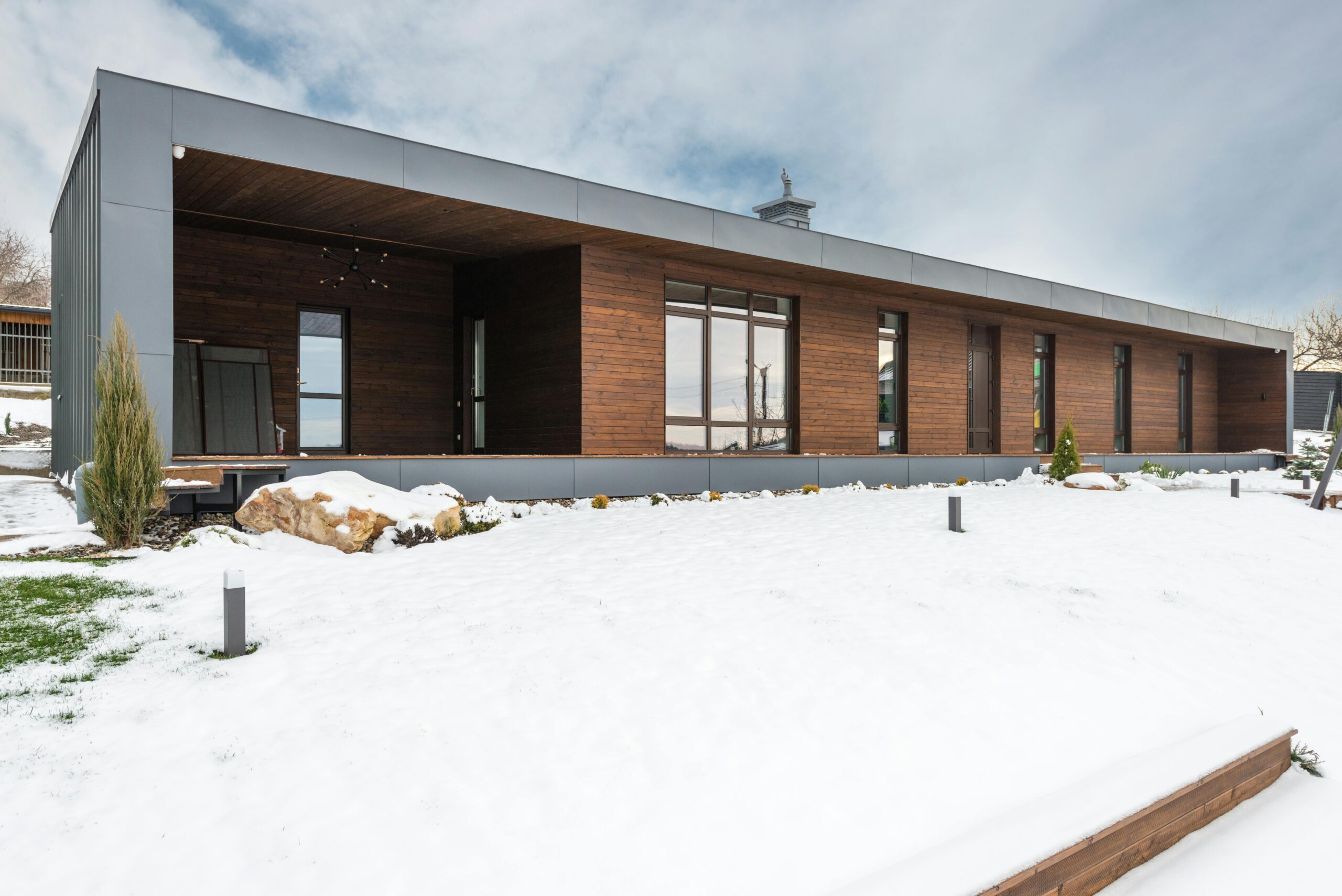
Prioritize building orientation as the single most impactful design decision, ideally elongating the structure along the east-west axis to maximize south-facing exposure. Position primary living spaces toward the sun for natural warmth and light, while locating bedrooms, storage, and garages on colder northern sides where they provide thermal buffering.
Select materials appropriate for your specific climate zone and site conditions. In temperate regions, thermal mass materials moderate temperature swings, while tropical climates benefit from lightweight, breathable materials that don’t retain heat. Invest in high-performance windows as they represent the most thermally vulnerable building elements. Consider how material choices affect not only performance but also embodied carbon from manufacturing and transportation.
Landscape thoughtfully, recognizing that vegetation creates powerful microclimatic effects. Plant deciduous trees on southern and western sides for summer shade and winter sun, position evergreens as windbreaks on exposed sides, and create outdoor rooms that extend living space while providing protected microclimates for different seasons. Native plants adapted to local conditions require less maintenance and support regional ecosystems.
🌟 Transforming Our Built Environment One Building at a Time
Climate-smart architecture represents far more than an aesthetic movement or technological trend—it embodies a fundamental reimagining of humanity’s relationship with the natural environment. By harnessing seasonal micro-climates rather than combating them with energy-intensive mechanical systems, buildings become partners with nature rather than isolated fortresses against it.
The transition toward climate-smart design won’t happen overnight, but each thoughtfully designed structure demonstrates possibilities and builds momentum. From modest residential renovations incorporating passive solar principles to ambitious institutional projects achieving net-zero performance, every implementation contributes to collective knowledge and shifts industry standards.
As climate change intensifies and resources become scarcer, the question is no longer whether we can afford to build climate-smart architecture, but whether we can afford not to. The buildings we construct today will shape environmental impacts, energy demands, and human wellbeing for decades to come. By choosing designs that work with seasonal patterns and local micro-climates, we create structures that are not only more sustainable and economical, but also more comfortable, beautiful, and harmonious with the world around them.
The path forward requires collaboration among architects, engineers, builders, policymakers, and occupants—all committed to creating a built environment that sustains rather than depletes our planet. Through informed design decisions, innovative materials, thoughtful site planning, and respect for nature’s wisdom, climate-smart architecture offers a viable blueprint for a sustainable future where human habitation enhances rather than degrades the environment.
