
Anúncios
High-ceiling atriums and architectural voids present unique climate control challenges that demand innovative solutions. Understanding air drift mechanics transforms these impressive spaces from energy drains into efficient, comfortable environments.
🌬️ Understanding Air Drift in Large Vertical Spaces
Anúncios
Air drift refers to the natural movement of air masses within enclosed spaces, driven by temperature differences and pressure variations. In high-ceiling atriums and multi-story voids, this phenomenon becomes dramatically pronounced, creating distinct thermal layers that can make or break your building’s comfort and efficiency profile.
The physics behind air drift is straightforward yet powerful: warm air rises while cool air sinks. In spaces with substantial vertical clearance—typically anything above 15 feet—this stratification intensifies. The temperature differential between floor and ceiling levels can reach 10-15 degrees Fahrenheit or more, creating what engineers call the “stack effect.”
Anúncios
This vertical temperature gradient doesn’t just affect comfort; it directly impacts your HVAC system’s performance, energy consumption, and operational costs. Traditional heating and cooling approaches often fail spectacularly in these environments, pushing conditioned air into spaces where occupants never experience its benefits.
The Hidden Costs of Ignoring Air Stratification
Many building managers and homeowners underestimate the financial impact of uncontrolled air drift. When heated air accumulates at ceiling level during winter months, your heating system works overtime to maintain ground-level comfort. The result? Energy bills that spiral upward while floor-level temperatures remain stubbornly cool.
Summer presents the inverse problem. Air conditioning systems pump cold air into lower zones, but without proper circulation strategies, warm air trapped above creates a thermal blanket that insulates against cooling efforts. Your AC runs continuously, struggling against basic thermodynamics.
Beyond energy waste, unmanaged air drift creates comfort inconsistencies that affect building usability. Retail spaces lose customers who feel uncomfortably cold near entrances. Office workers in mezzanine areas suffer in stifling heat while ground-floor colleagues remain comfortable. Residential atriums become showcase spaces that families avoid due to temperature extremes.
🏗️ Architectural Characteristics That Amplify Air Drift
Certain design elements accelerate or complicate air movement patterns. Understanding these factors helps you develop targeted solutions for your specific space:
- Ceiling height: Spaces exceeding 20 feet create pronounced stratification zones requiring active management
- Window placement: High clerestory windows generate solar gain that intensifies warm air accumulation
- Open floor plans: Connected spaces allow air masses to migrate freely, spreading stratification problems
- Atrium shape: Narrow, tall voids create chimney effects that accelerate vertical air movement
- Material choices: Reflective surfaces, exposed concrete, and glass walls influence radiant heat transfer
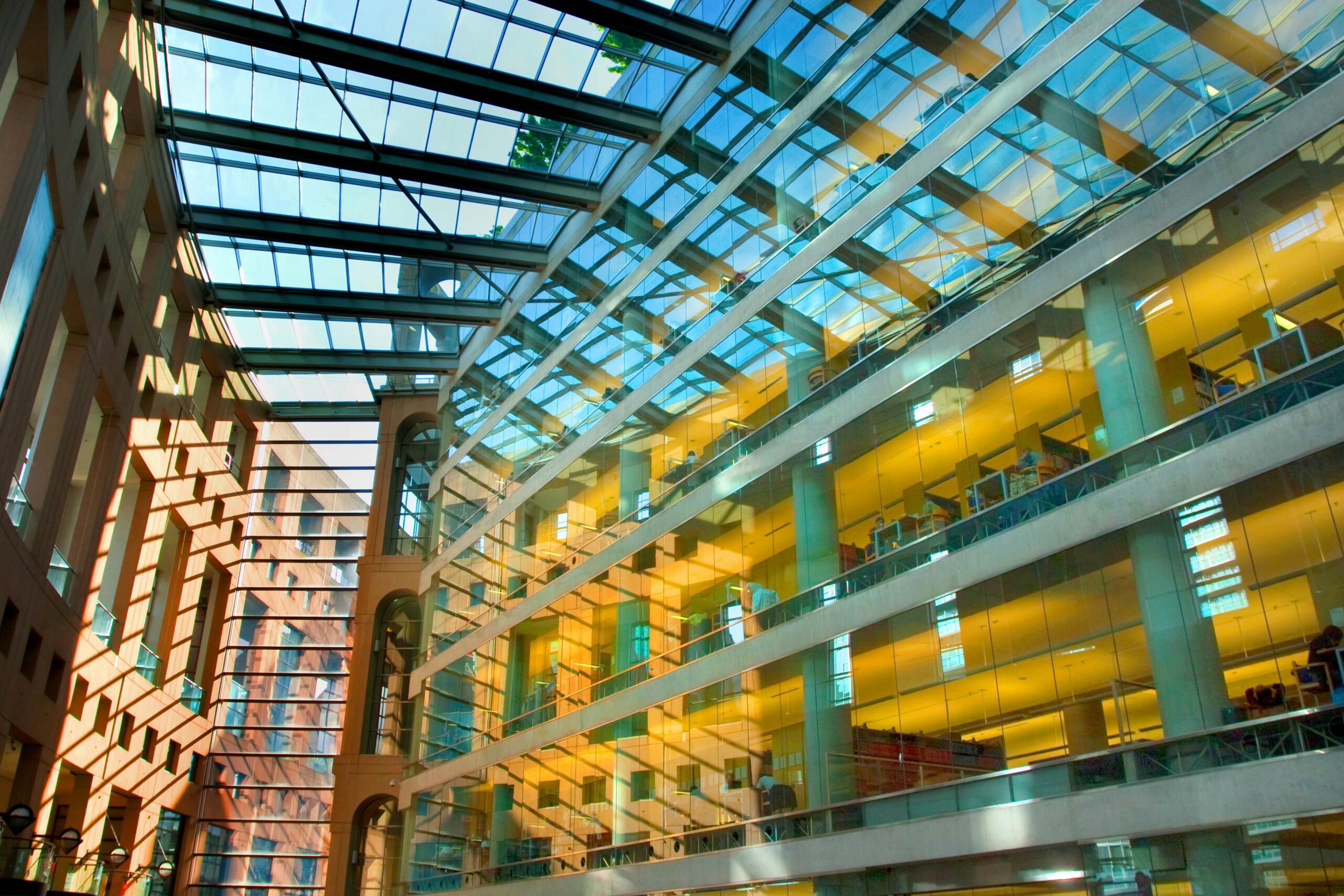
Contemporary architecture increasingly features dramatic vertical spaces that showcase design prowess. While visually stunning, these elements demand sophisticated climate control strategies that go beyond conventional HVAC approaches.
Strategic Fan Placement for Maximum Air Circulation
Ceiling fans represent the most cost-effective intervention for managing air drift in high-ceiling spaces. However, standard residential fan installations prove woefully inadequate for atrium environments. Strategic placement and proper sizing make the difference between marginal improvement and transformative results.
For heating season optimization, large-diameter fans (8-12 feet minimum for commercial spaces) should operate in reverse mode, drawing air upward from floor level. This creates a gentle circulation pattern that pulls warm air down from ceiling zones without creating uncomfortable drafts. The key lies in selecting fans with appropriate CFM (cubic feet per minute) ratings for your space volume.
Calculate required airflow using this formula: Space volume (length × width × height) divided by 8 equals minimum CFM needed for effective destratification. A 40-foot-high atrium measuring 30×30 feet requires fans capable of moving approximately 4,500 CFM collectively.
📊 Measuring and Monitoring Thermal Stratification
Effective air drift management begins with accurate measurement. Installing temperature sensors at multiple vertical levels provides the data necessary for informed decision-making. Place sensors at floor level, mid-height, and near ceiling level to establish your stratification profile.
| Measurement Point | Optimal Temperature Range (Winter) | Optimal Temperature Range (Summer) |
|---|---|---|
| Floor Level (0-6 ft) | 68-72°F | 72-76°F |
| Mid-Height | 70-73°F | 74-77°F |
| Ceiling Level | 72-75°F | 76-80°F |
Temperature differentials exceeding 5 degrees between measurement points indicate stratification problems requiring intervention. Modern building management systems integrate these sensors with automated fan controls, adjusting circulation based on real-time conditions.
Mechanical Destratification Systems That Actually Work
When ceiling fans alone can’t solve severe stratification, mechanical destratification systems provide powerful alternatives. These specialized units mount at high levels and direct focused air streams downward, actively mixing thermal layers.
Jet fans create high-velocity air streams that entrain surrounding air, generating circulation far exceeding their physical size. A single well-positioned jet fan can influence air movement throughout a 10,000-square-foot atrium. These units excel in spaces where aesthetic concerns prohibit large ceiling fans or where extreme ceiling heights make traditional fans impractical.
Fabric duct systems offer another solution, distributing conditioned air through porous textile tubes that release air along their entire length. This creates gentle, uniform air delivery that minimizes stratification while reducing the drafty conditions associated with conventional ductwork.
🌡️ HVAC Modifications for Atrium Environments
Standard HVAC systems designed for conventional spaces rarely perform optimally in high-ceiling atriums. Several modifications significantly improve performance without complete system replacement.
Variable air volume (VAV) systems with zone-specific controls allow independent temperature management for different vertical levels. Ground-floor zones receive different air volumes and temperatures than mezzanine or upper-level zones, compensating for natural stratification.
Displacement ventilation represents a paradigm shift from traditional overhead air delivery. These systems introduce cool air at floor level, allowing natural convection to lift air upward as it warms. This approach works with physics rather than against it, substantially reducing energy consumption while improving comfort.
Radiant heating and cooling systems bypass air movement issues entirely, using surface temperatures to influence occupant comfort directly. Radiant floor heating prevents cold feet in winter without battling air stratification, while chilled beams or ceiling panels provide cooling without fighting warm air accumulation.
Natural Ventilation Strategies for Seasonal Optimization
Properly designed natural ventilation harnesses air drift as an asset rather than fighting it as a liability. Strategic window placement at multiple levels creates controlled air flow paths that purge excessive heat during appropriate seasons.
High-level operable windows or roof vents allow hot air to escape naturally during summer months. When paired with lower-level air intakes, this creates a thermosiphon effect—warm air exits at high points while drawing cooler air in below. This passive cooling can eliminate mechanical cooling needs during shoulder seasons.
Automated window controls linked to temperature sensors maximize natural ventilation benefits without requiring manual operation. These systems open high-level vents when appropriate conditions exist and close them when mechanical conditioning becomes necessary.
🎨 Design Interventions That Control Air Movement
Architectural elements can guide or disrupt air flow patterns, offering opportunities for passive air drift management during design phases or renovations.
Partial-height interior walls or screens create horizontal barriers that limit vertical air migration without compromising visual openness. A well-placed architectural feature at 10-12 feet height can dramatically reduce stratification in a 30-foot atrium.
Balcony and mezzanine designs influence air circulation patterns. Solid railings trap air masses differently than open railings, while balcony depths affect air flow around these features. Strategic railing transparency improves air mixing between levels.
Light shelves and horizontal architectural projections interrupt vertical air currents, promoting mixing between thermal layers. These elements serve dual purposes—controlling daylight while improving air circulation.
Seasonal Programming for Year-Round Efficiency
Optimal air drift management requires seasonal adjustments that respond to changing outdoor conditions and solar angles. Winter strategies emphasize drawing warmth downward, while summer approaches focus on preventing heat accumulation.
During heating season, maximize destratification fan operation during occupied hours. Run fans continuously in reverse mode when heating systems operate, reducing runtime requirements by 20-40%. Program night setbacks that reduce fan operation when spaces are unoccupied, balancing energy savings against morning warm-up times.
Summer programming should activate circulation fans when cooling systems run, but consider turning fans off during peak heat when introducing additional air movement provides diminishing returns. Increase natural ventilation during morning and evening hours when outdoor temperatures allow.
💡 Smart Controls That Optimize Performance Automatically
Manual management of complex air drift systems proves impractical for most applications. Smart building controls integrate multiple systems, automatically adjusting operation based on measured conditions and learned patterns.
Modern building automation systems monitor temperature stratification, occupancy patterns, outdoor conditions, and energy costs simultaneously. These platforms adjust fan speeds, HVAC setpoints, and natural ventilation openings to maintain comfort while minimizing energy consumption.
Machine learning algorithms identify optimization opportunities that static programming misses. These systems recognize patterns—like morning solar gain through east-facing atrium glass—and preemptively adjust circulation before comfort problems develop.
Retrofit Solutions for Existing Problem Spaces
Many building owners inherit atrium spaces with inadequate climate control systems. Retrofit solutions can transform these challenging environments without prohibitive costs or extensive construction.
Suspended ceiling fans specifically designed for high-ceiling applications offer the most cost-effective intervention. Modern units with integrated controls and variable speeds provide sophisticated destratification without electrical system upgrades. Installation typically requires only structural mounting points and basic electrical connections.
Portable or semi-permanent jet fans provide flexible solutions for spaces where permanent installations face aesthetic or historic preservation objections. These units mount on existing structural elements and redirect existing air flows rather than requiring new ductwork.
Zoned space heaters and coolers address localized comfort problems without whole-building HVAC modifications. Radiant panel heaters warm specific floor areas where cold air pools, while evaporative coolers provide supplemental cooling in upper mezzanine zones that trap heat.
🔍 Troubleshooting Common Air Drift Problems
Even well-designed systems occasionally develop performance issues. Systematic troubleshooting identifies root causes and appropriate solutions.
If ground-level temperatures remain cool despite destratification efforts, verify fan rotation directions and speeds. Many installations mistakenly operate fans in summer mode during winter, pulling air upward rather than pushing warmth downward. Confirm actual airflow patterns using smoke pencils or airflow visualization methods.
Persistent upper-level heat accumulation despite active circulation suggests insufficient air movement capacity. Calculate actual CFM requirements and compare against installed fan capacity. Spaces often need 50-100% more circulation capacity than initial estimates suggest.
Uncomfortable drafts at floor level indicate excessive fan speeds or improper air discharge angles. Reduce fan speeds or adjust directional louvers to create gentler air movement. Effective destratification requires air mixing, not high-velocity drafts.
Energy Savings and ROI Calculations
Proper air drift management delivers measurable financial returns through reduced energy consumption and equipment longevity. Quantifying these benefits justifies initial investments and guides system selection.
Destratification systems typically reduce heating costs by 20-40% in high-ceiling spaces. A 30-foot-high atrium consuming $5,000 annually for heating can save $1,000-$2,000 yearly with proper circulation. Commercial-grade destratification fans costing $2,000-$5,000 deliver payback periods of 2-5 years from energy savings alone.
Cooling cost reductions prove more modest but still significant—typically 10-15% savings. Combined heating and cooling savings, plus improved HVAC equipment life from reduced runtime, create compelling economic cases for most applications.
Beyond direct energy savings, improved comfort enhances space usability and occupant satisfaction. Retail environments report increased dwell times and sales. Offices document improved productivity and reduced complaints. Residential spaces become functional rather than merely decorative.
⚡ Emerging Technologies Transforming Air Management
Innovation continues advancing air drift management capabilities. Several emerging technologies promise enhanced performance and efficiency.
DC motor ceiling fans consume 70% less energy than conventional AC motor units while providing variable speed control and quieter operation. These fans integrate with smart home and building management systems, enabling sophisticated automated control strategies.
Thermal imaging cameras identify stratification patterns and circulation dead zones that temperature sensors miss. These tools guide optimal fan placement and reveal insulation deficiencies contributing to comfort problems.
Computational fluid dynamics (CFD) modeling predicts air movement patterns before installation, optimizing system design and preventing costly trial-and-error approaches. Professional energy auditors increasingly offer CFD analysis services that dramatically improve project outcomes.
Maintaining Long-Term Performance Excellence
Air drift management systems require periodic maintenance to sustain optimal performance. Establishing routine service schedules prevents gradual degradation that erodes efficiency gains.
Clean ceiling fan blades annually at minimum. Dust accumulation reduces airflow efficiency by 20-30% while increasing energy consumption. High-ceiling applications require specialized cleaning equipment or professional services, but the performance improvement justifies the effort.
Verify sensor calibration annually. Temperature sensors drift over time, providing inaccurate readings that compromise automated control strategies. Recalibrate or replace sensors showing deviations exceeding 2 degrees from reference measurements.
Review system programming seasonally. Building usage patterns, furniture arrangements, and occupancy schedules change over time. Update control sequences to reflect current conditions rather than original commissioning assumptions.
🏆 Transforming Challenges Into Competitive Advantages
Mastering air drift management transforms architectural liabilities into distinctive assets. Spaces that once presented climate control nightmares become showcases of efficiency and comfort that enhance property value and occupant experience.
The impressive visual impact of high-ceiling atriums and dramatic voids need not compromise comfort or sustainability. Strategic application of circulation technologies, smart controls, and design integration creates environments where architectural ambition and environmental performance coexist harmoniously.
Building owners and managers who invest in proper air drift solutions reap financial returns through reduced operating costs, enhanced space utility, and improved occupant satisfaction. These benefits compound over building lifecycles, delivering value that far exceeds initial system investments.
As energy costs rise and sustainability concerns intensify, effective management of large vertical spaces transitions from luxury to necessity. The techniques and technologies discussed here provide proven pathways to achieving high-ceiling comfort without high energy costs—unleashing the true potential of your most impressive architectural features.
