
Anúncios
Urban heat islands and rising temperatures are pushing architects and planners to rethink how we design cities, especially in hot-humid climates where comfort and sustainability matter most.
🌆 The Urban Heat Challenge in Hot-Humid Climates
Anúncios
Cities across tropical and subtropical regions face an escalating challenge: managing heat in densely populated urban blocks. The combination of concrete jungles, limited green spaces, and high humidity creates uncomfortable microclimates that drain energy resources and compromise quality of life. Traditional air conditioning systems consume massive amounts of electricity, contributing to greenhouse gas emissions and creating a vicious cycle of heat generation.
Hot-humid urban environments present unique difficulties. Unlike dry climates where nighttime cooling provides relief, humid cities maintain elevated temperatures around the clock. The moisture-laden air reduces evaporative cooling potential, making passive strategies more challenging yet more critical to implement. Residents in these areas often experience heat stress, reduced productivity, and increased health risks during peak summer months.
Anúncios
The urban heat island effect amplifies these problems. Dark surfaces absorb solar radiation, buildings trap heat, and limited air circulation prevents natural cooling. Studies show that urban areas can be 3-5°C warmer than surrounding rural regions, with some city centers experiencing even greater temperature differentials during heat waves.
☀️ Understanding Passive Shading Principles
Passive shading systems work with nature rather than against it, using architectural design to control solar heat gain without mechanical assistance. These strategies have been employed for centuries in vernacular architecture, from Middle Eastern wind towers to Southeast Asian stilted houses. Modern innovation brings scientific precision to these time-tested concepts.
The fundamental principle involves blocking or redirecting solar radiation before it enters buildings or heats surfaces. Effective passive shading considers sun angles, seasonal variations, building orientation, and local climate patterns. In hot-humid climates, the goal extends beyond simple shade creation to include promoting air movement and preventing moisture accumulation.
Three primary mechanisms make passive shading effective: reflection, absorption, and obstruction. Reflective surfaces bounce solar energy away, absorptive materials capture and slowly release heat, and physical barriers block direct sunlight. The most sophisticated systems combine these approaches strategically based on specific site conditions and user needs.
🏢 Innovative Facade Solutions for Dense Urban Blocks
Modern facade technologies transform building exteriors into dynamic climate control systems. Double-skin facades create ventilated cavities that act as thermal buffers, allowing hot air to rise and escape while protecting inner walls from direct solar exposure. These systems can reduce cooling loads by 20-40% in hot-humid conditions when properly designed.
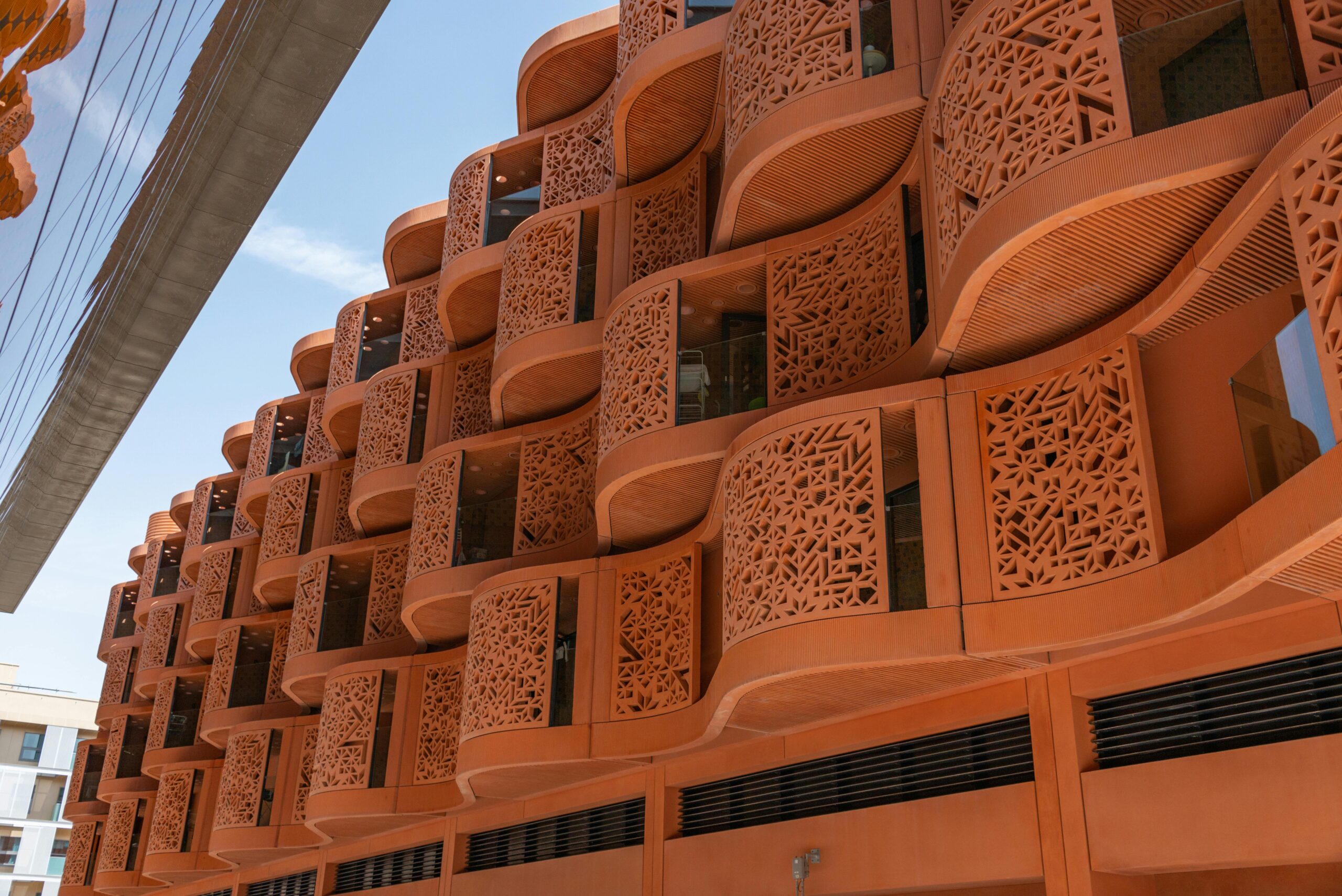
Perforated screens and brise-soleil represent another frontier in passive shading innovation. These elements filter sunlight while maintaining views and natural ventilation. Contemporary materials like high-performance ceramics, recycled aluminum composites, and engineered timber allow for intricate patterns that balance aesthetics with thermal performance. The perforation ratio, depth, and angle can be optimized using computational design tools to respond to specific solar geometries.
Kinetic facades take adaptation to the next level, featuring movable elements that respond to changing sun positions throughout the day. While incorporating minimal mechanical assistance, these systems remain largely passive by design. Motorized louvers, rotating panels, and folding screens can be programmed or manually adjusted to provide maximum shading during peak heat hours while opening for natural light during cooler periods.
Green Facade Systems and Vertical Gardens
Living walls and climbing plant systems offer biological solutions to urban heat challenges. Vegetation provides multiple benefits: transpirational cooling, air purification, acoustic buffering, and psychological wellness. In hot-humid climates, selecting appropriate plant species becomes critical, prioritizing drought-resistant varieties that thrive in vertical environments with minimal maintenance.
Modular green facade systems simplify installation and maintenance. These pre-planted panels include integrated irrigation and drainage, making vertical greening accessible even on existing buildings. The thermal performance of a mature green wall can reduce surface temperatures by 10-15°C compared to exposed concrete or glass, creating significant cooling effects for both buildings and surrounding microclimates.
🌳 Street-Level Interventions and Public Space Cooling
Individual buildings cannot solve urban heat problems alone; street-level strategies create comfortable outdoor environments that encourage walking, social interaction, and reduced vehicle dependence. Canopy structures using lightweight tensile fabrics provide flexible shading solutions for plazas, sidewalks, and transit stops. These temporary or semi-permanent installations can be deployed seasonally or remain year-round.
Tree planting remains one of the most cost-effective passive cooling strategies available. A single mature tree can provide the cooling equivalent of ten room-sized air conditioners operating 20 hours daily. Strategic street tree placement creates shaded pedestrian corridors, reduces pavement temperatures, and improves air quality. In hot-humid climates, species selection should prioritize broad canopies, fast growth rates, and resilience to urban stressors.
Pergolas and architectural shading structures enhance public spaces while supporting climbing vegetation. These hybrid solutions combine immediate architectural shade with long-term biological cooling as plants mature. Materials like bamboo, reclaimed wood, and powder-coated steel offer durability and aesthetic appeal while minimizing embodied carbon.
🔄 Innovative Materials Transforming Urban Cooling
Material science breakthroughs enable passive shading systems that previous generations could only imagine. Phase-change materials embedded in building envelopes absorb excess heat during the day and release it at night, smoothing temperature fluctuations. While more common in dry climates, specialized formulations now work effectively in humid conditions when properly integrated with ventilation strategies.
Cool pavement technologies reduce ground-level heat absorption through reflective coatings and permeable surfaces. Light-colored pavements reflect up to 50% more solar radiation than conventional dark asphalt, lowering surface temperatures by 5-10°C. Permeable pavements add evaporative cooling benefits while managing stormwater, addressing multiple urban challenges simultaneously.
Electrochromic glazing represents a sophisticated approach to dynamic shading, using electrical currents to control glass transparency. Though requiring minimal energy input, these systems provide unprecedented control over solar heat gain and daylighting. As costs decrease, electrochromic windows become increasingly viable for residential and commercial applications in hot-humid urban environments.
📐 Design Integration Strategies for Maximum Impact
Successful passive shading requires holistic design thinking from project inception. Computer simulations using tools like Grasshopper, Ladybug, and Climate Studio allow architects to test shading strategies against local climate data before construction begins. These parametric workflows optimize louver angles, overhang depths, and screen perforation patterns for specific building orientations and latitudes.
Building orientation fundamentally affects shading requirements and effectiveness. In hot-humid climates, elongated building forms with east-west orientation minimize solar exposure on long facades. When site constraints prevent ideal orientation, enhanced shading on sun-exposed elevations becomes essential. South-facing surfaces in northern hemisphere locations (north-facing in southern hemisphere) receive consistent sun angles that simplify shading design.
Cross-ventilation strategies must work synergistically with shading systems. Shaded facades reduce heat gain, but without adequate air movement, humid conditions can lead to condensation and mold growth. Window placement, internal layouts, and external shading elements should be coordinated to create pressure differentials that drive natural ventilation.
Neighborhood-Scale Planning for Collective Cooling
Individual building interventions multiply their effects when coordinated across neighborhoods. Urban planning strategies that mandate setbacks, height limits, and green coverage ratios create ventilation corridors and reduce canyon effects. Mixed-use developments reduce heat-generating commutes while activating streets throughout the day and evening.
Community cooling centers provide refuge during extreme heat events. These public facilities combine passive shading, natural ventilation, and minimal active cooling to offer accessible relief. Libraries, community centers, and transit hubs can be retrofitted or designed as climate havens that serve dual purposes year-round.
💰 Economic Viability and Return on Investment
Initial costs for innovative passive shading systems vary widely depending on complexity and materials. Simple solutions like awnings and shade trees require minimal investment, while sophisticated kinetic facades or green walls demand higher upfront spending. However, lifecycle cost analysis consistently favors passive strategies over conventional air conditioning dependence.
Energy savings represent the most quantifiable benefit. Buildings with effective passive shading can reduce cooling energy consumption by 25-50% in hot-humid climates. Over a typical 30-year building lifespan, these savings substantially exceed installation costs, especially as energy prices rise. Reduced HVAC system sizes further decrease initial construction expenses, partially offsetting shading investments.
Property value increases provide additional economic incentives. Buildings with distinctive sustainable features command premium rents and sales prices. Enhanced occupant comfort reduces turnover costs in residential buildings and improves productivity in commercial spaces. Green building certifications like LEED and WELL increasingly recognize passive shading contributions, adding market differentiation.
🌍 Real-World Implementation Success Stories
Singapore’s public housing developments showcase large-scale passive shading implementation. The Housing & Development Board incorporates deep balconies, vertical greenery, and sky gardens across thousands of residential units. These features reduce cooling loads while creating comfortable outdoor spaces in one of the world’s most humid cities. Monitoring data shows internal temperature reductions of 2-4°C compared to conventionally designed blocks.
Medellín, Colombia transformed itself from one of the world’s hottest cities to a model of climate-responsive urbanism. The city implemented an extensive cable car system connecting hillside neighborhoods, reducing vehicle emissions while the stations feature exemplary passive shading. Green corridors along major thoroughfares provide continuous shade canopies, lowering street-level temperatures and encouraging walking.
The Pearl Academy in India demonstrates how institutional buildings can pioneer passive design in hot-humid regions. The campus features a stepwell-inspired courtyard, evaporative cooling systems, and an elaborate facade of jaali screens. These traditional elements reinterpreted through contemporary design reduce energy consumption by 60% compared to conventional academic buildings.
🔧 Maintenance Considerations for Long-Term Performance
Passive shading systems require different maintenance approaches than mechanical cooling equipment. Fixed elements like overhangs and screens need occasional cleaning and inspection for structural integrity. In coastal humid environments, material selection should account for salt exposure and corrosion potential. Powder-coated finishes, stainless steel hardware, and treated timber extend service life.
Living systems demand regular attention but reward caretakers with improving performance over time. Green facades need irrigation system checks, seasonal pruning, and occasional replanting. Establishing maintenance protocols before installation ensures long-term success. Community engagement programs can distribute maintenance responsibilities while building social connections around shared environmental assets.
Kinetic systems require the most active maintenance, with moving parts needing periodic lubrication and adjustment. However, properly designed systems using quality components operate reliably for decades with reasonable care. Automated controls should include manual override capabilities to ensure functionality during power outages or system failures.
🚀 Emerging Technologies and Future Directions
Biomimetic design draws inspiration from natural cooling strategies observed in termite mounds, leaves, and animal skin. Researchers are developing building materials with microstructures that enhance radiative cooling or create air movement through passive pressure differentials. These innovations promise even more effective passive strategies in coming years.
Smart materials that respond to temperature or humidity without external power inputs represent another frontier. Shape-memory polymers can open or close ventilation pathways based on ambient conditions. Thermochromic coatings change color and reflectivity as temperatures rise, providing automatic adaptation to varying solar intensities.
Integrated photovoltaic shading combines energy generation with passive cooling. Solar panels positioned as external shading devices serve dual functions, generating renewable electricity while blocking solar heat gain. Advances in transparent solar cells may eventually allow windows themselves to generate power while providing variable shading.
🎯 Implementing Passive Shading in Your Urban Context
Starting with passive shading improvements requires assessment of specific needs and opportunities. Building owners can begin with simple interventions like installing exterior window shades, planting climbing vines, or painting roofs white. These low-cost measures provide immediate comfort improvements while building momentum for larger projects.
Professional consultants specializing in sustainable design can conduct thermal modeling and recommend tailored strategies. Many municipalities offer grants or technical assistance for green building retrofits, reducing financial barriers. Forming neighborhood associations around climate adaptation creates collective bargaining power for bulk purchasing and coordinated implementation.
Policy advocacy accelerates passive shading adoption across entire cities. Building codes that mandate minimum shading factors, green coverage ratios, or albedo standards create level playing fields while driving innovation. Tax incentives for sustainable construction shift market dynamics, making passive strategies standard practice rather than exceptional efforts.
The transition to cooler, more livable cities requires collective action combining individual initiative, professional expertise, and supportive policies. Passive shading systems offer proven, cost-effective pathways to thermal comfort without exacerbating climate change. By drawing on both traditional wisdom and cutting-edge innovation, hot-humid urban blocks can become models of climate-responsive design that inspire global transformation. The technologies and strategies exist today; implementation requires only commitment to prioritizing long-term sustainability over short-term convenience. Every shaded facade, planted street tree, and thoughtfully designed public space contributes to urban environments where residents thrive despite rising temperatures.
